

Agriculture in nepal will rise by adding 32% budget, Minister for Energy, Water Resources and Irrigation, Barsaman Pun stated in a general discussion occurred Tuesday
A general discussion is underway over the budget for the next financial year at a meeting of the House of Representatives. General discussions are underway from Tuesday over the budget presented by Economy Minister Janardon Sharma at a joint session of both houses of Parliament last Sunday.
MPs involved in the discussions are holding views on the side of the budget and the opposition. In the same way, Maoist Centre MP Pun, who was even a former finance minister, said it is a revolutionary step to increase the budget by 32% in agriculture.
Agriculture has a 32% budget increase concerning the development of agriculture in nepal. It is a very positive and revolutionary move, ‘he said again. He has even called it a ‘revolutionary deceit.’
He said the current budget had taken the direction of structural transformation of agriculture, saying manpower – which is 61% more agricultural – remains unemployed and semi-employed.
Agriculture in Nepal
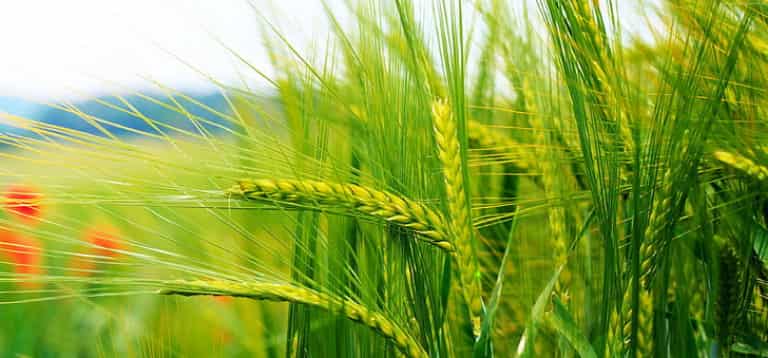
Nepal is agricultural land with 66% of people employed in farming. Farming is subsistent and the crop is mainly incorporated with livestock. Nepal is richly gifted with agro-biodiversity. Rice, Wheat, Maize, Barley, millet, barley, and Buckwheat are the main staple meal crops.
Having said that, there are several problems of agriculture in Nepal such as high instability, low productivity, climate fluctuation, lack of sufficient investment and infrastructure, and human resource development.

Most of the farmers of Nepal are poor. They don’t have enough storage capacity for agricultural products. They don’t get a fair price for their production.
If there is sufficient investment and farming techniques, it is easily possible to create employment in agriculture in nepal.
How to improve agriculture in Nepal?
In attempting to improve agricultural production and diversify the farming base, the government concentrated on irrigation, the usage of fertilizers and insecticides, the opening of new tools and new seeds of high-yield combinations, and the requirement of credit.