

As the moon nears its farthest point from Earth, the Jan. 6 Wolf moon will appear up to 14% smaller than the Supermoon. SEATTLE – The first full moon of 2023 will shine in the sky on January 6 at 3:08 p.m. PT, but the moon will appear smaller than we normally do for observations.
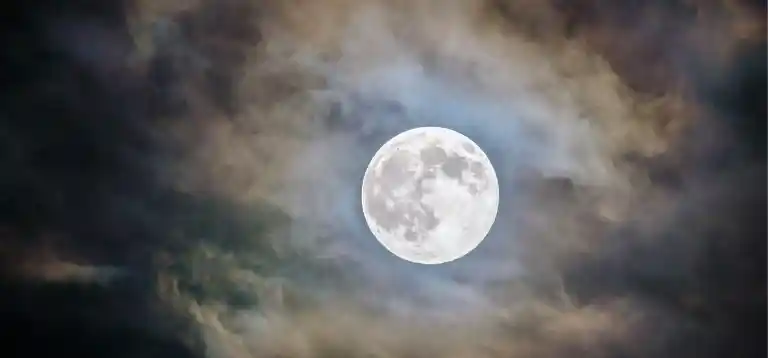
This is because this full moon is different from a micro or super moon.
The moon appears small because its orbit is near its farthest point from Earth. Like Earth, the Moon’s orbit is an ellipse instead of a perfect circle, so there is a point where the Moon’s orbit returns when it reaches Earth.
The time when the moon is farthest from the earth is called apogee. On the other hand, when the moon is closest to the earth, it is called perigee. When the moon is near perigee, it is a supermoon where the full moon usually appears larger and brighter.
Also Read: Big Sign Of Dying Earth Could Reach Sixth Mass Extinction
According to EarthSky.org, on Friday night the moon will be closest to its furthest point from Earth, making the moon appear nearly 14% smaller than the supermoon.
The January micromoon is one of two micromoons in 2023. The second micromoon will occur in February, which will be the outermost micromoon in 2023.
The Friday night full moon is often called the “wolf moon” because you can hear wolves howl at this time of year. According to the Farmer’s Almanac, wolves are believed to cry from hunger during the winter. This opinion has changed over time.