

Multiple jobs in Russia are losing priority just because of the pandemic and recently ongoing sanctions from all over the world.
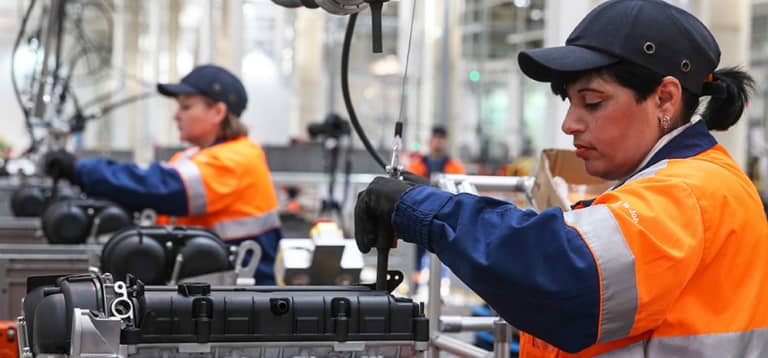
As businesses flee Russia, their Russian workers are facing their jobs unexpectedly disappearing. Tens of thousands of such workers will be missed loose into an economy where the inflation rate is at a 20-year-high, and where various, flourishing jobs were difficult to find even before the Ukraine war.
McDonald’s leaves after fast-food employees: 62,000 of them, across 850 diners. (They will persist to be paid until the media are sold to a local buyer, the party said.) Renault hired 45,000 individuals in Russia. Ikea’s 15,000 workers will be paid solely until the end of August. Siemens had 3,000 individuals on its registrations in Russia until it exited the nation in mid-May. White-collar and Blue-collar workers also are entering the jobless in a fast-building jobs crisis.
The Russian unemployment rate, which flowed at around 4.6% in the foremost quarter of 2022, is possible to increase to 9% by the end of the year, according to a survey of reviewers that Bloomberg held in April. Simultaneously, Russian annual inflation hit up to almost 18% in April. The mixture will guide to a cost-of-living crunch that will break the intermediate Russian resident as well as the finance badly. According to a revealed record, the Russian finance ministry anticipates the GDP to shrink by 12% this time, obliterating a full decade of financial growth.
Russia may fail about 2 million jobs this year
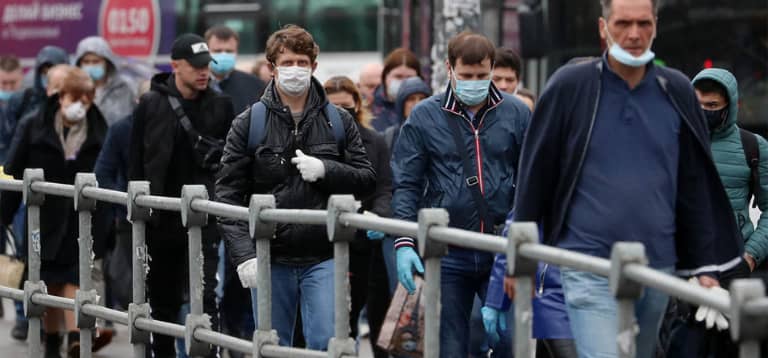
Russian unemployment doesn’t depend only on foreign corporations, of course, but it does depend laboriously on being connected to the global economy. Western boycotts indirectly threaten even employees in household firms. As earlier as March, according to a Russian bureaucrat, the job position of 95,000 workers moved to “on standby,” a dangerous position equivalent to paid vacation. In February, 3 million Russian residents were jobless. An additional 2 million jobs are in danger this year, following a statement from the Center for Strategic Research, which is a think-tank in Moscow.
The livelihoods of those engaged by exiting enterprises now rely on the luck of these companies. Renault’s Moscow factory, for example, will be maintained available by the state, which has nationalized it and intends to utilize it to manufacture the Moskvitch, a boxy, Soviet-generation car.
The mayor of Moscow, Sergei Sobyanin says that they can not let thousands of workers be left at work. They will try to maintain most of the teamwork directly on the plant and its partners.
On the other hand, Mcdonald’s has yet to discover a local buyer for its restaurants. A business like Spotify, which completed its Russia office, doesn’t have the type of industry that can be sold to a Russian customer. Other workers are in a sort of experienced limbo. Zara, the clothing giant, has discontinued its Russian processes, so its team is being spent two-thirds of their wages—for now.
How lengthy that limbo will stay is difficult to describe. Boycotts on Russia may continue even after the battle ends, walling the land off from the remainder of the world’s thrift. And Russia’s economy is so full-bodied in a few sectors—gas and oil, mining, particular types of manufacturing—that there aren’t sufficient companies to soak a combination of workers. If players like Zara and Renault don’t bear in the foreseeable fortune, the jobs crisis will seat at the core of a collapsing economy in Russia.